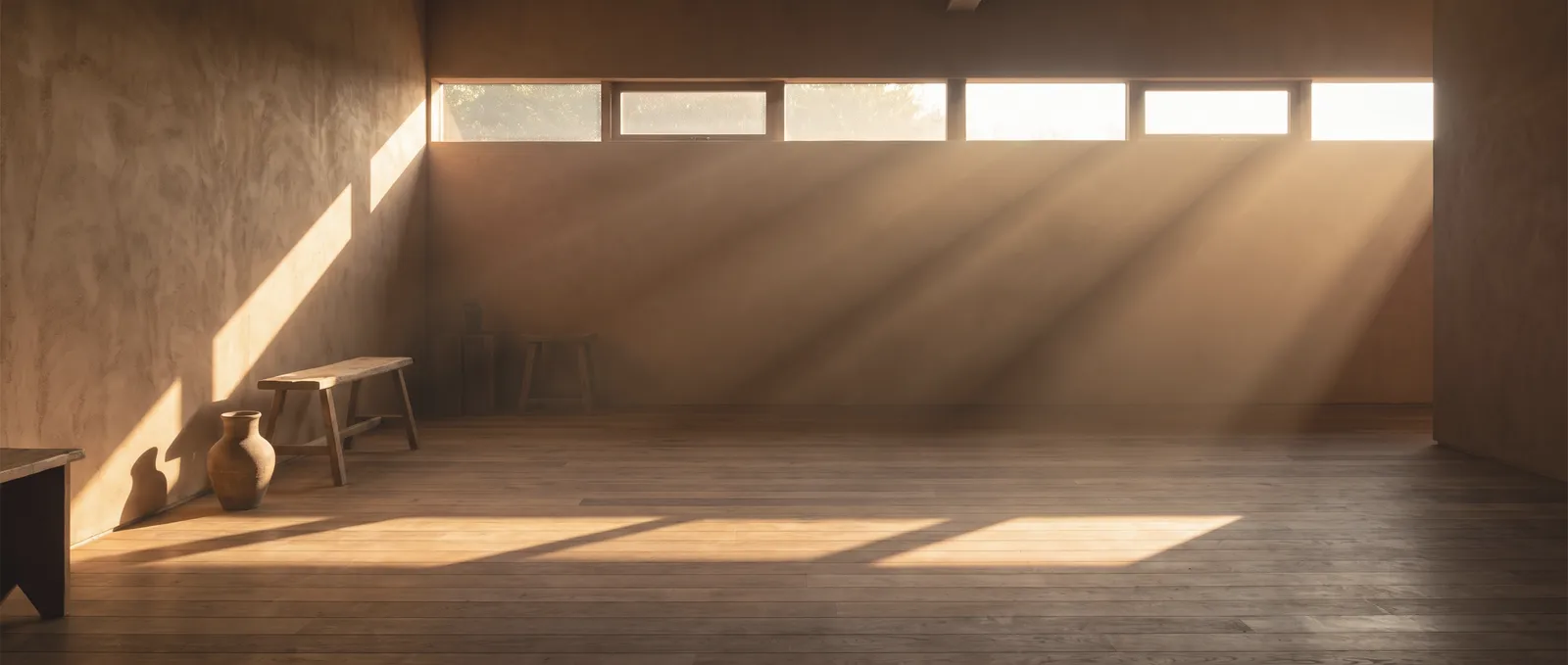
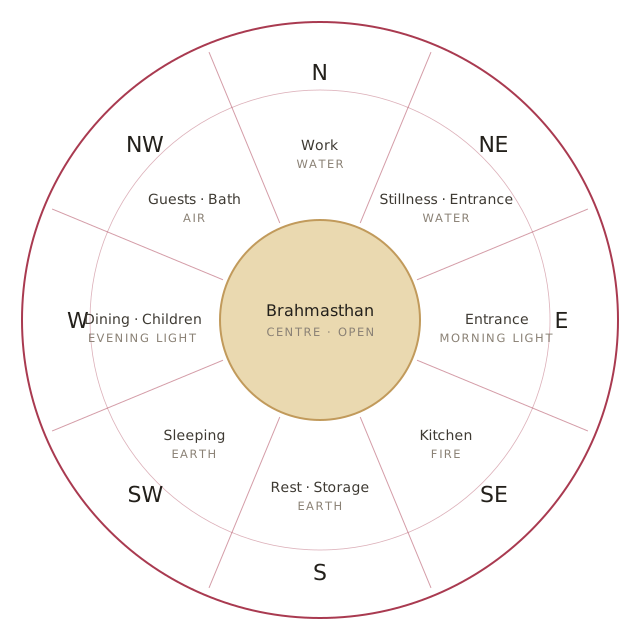
Vastu assigns every use to a cardinal direction. Behind this stands the Vedic observation of the sun’s path: the east receives the first, low, gentle light — this is where the entrance and living rooms that begin the day belong. The southeast heats up in the morning — the classical place of fire, and thus of the kitchen. The southwest stores the day’s warmth and comes to rest in the evening — the right place for sleeping. The north stays evenly bright without glare — ideal for work.
Then there is weight: Vastu places mass and height to the south and west, openness and lightness to the north and east. The house shields the harsh afternoon sun and opens itself to the morning. Building this way is also climatically wise — much of what counts as solar building today has been the rule in Vastu for centuries.
The rose shows the eight directions with their qualities and typical uses. It is the starting point of every Vastu analysis: first the place and its directions, then the floor plan.